


Footage of the Merkury corvette attacked the 22 of November 2026 by an Ukrainian sea drone. Source: Volodymyr Zelensky on X.com
A Ukraine sea-drone operation sank the Russian corvette Меркурий (Merkury) near Benghazi, Libya, on 22 November. President Volodymyr Zelensky confirmed that seven Ukrainian-made naval drones were deployed, claiming the destruction of the warship, commissioned in 2023, and a Ka-27 military helicopter. Footage released by Ukraine shows the attack on Russian vessels, while satellite imagery reveals Merkury capsized and largely submerged alongside the pier, surrounded by debris. Another target was the Russian cargo ship Angara, which Zelensky identified as a vessel used to transport weapons. The attack brings renewed attention to Russia’s military shipping operations in the Mediterranean and the vessels supporting its deployments in North Africa.
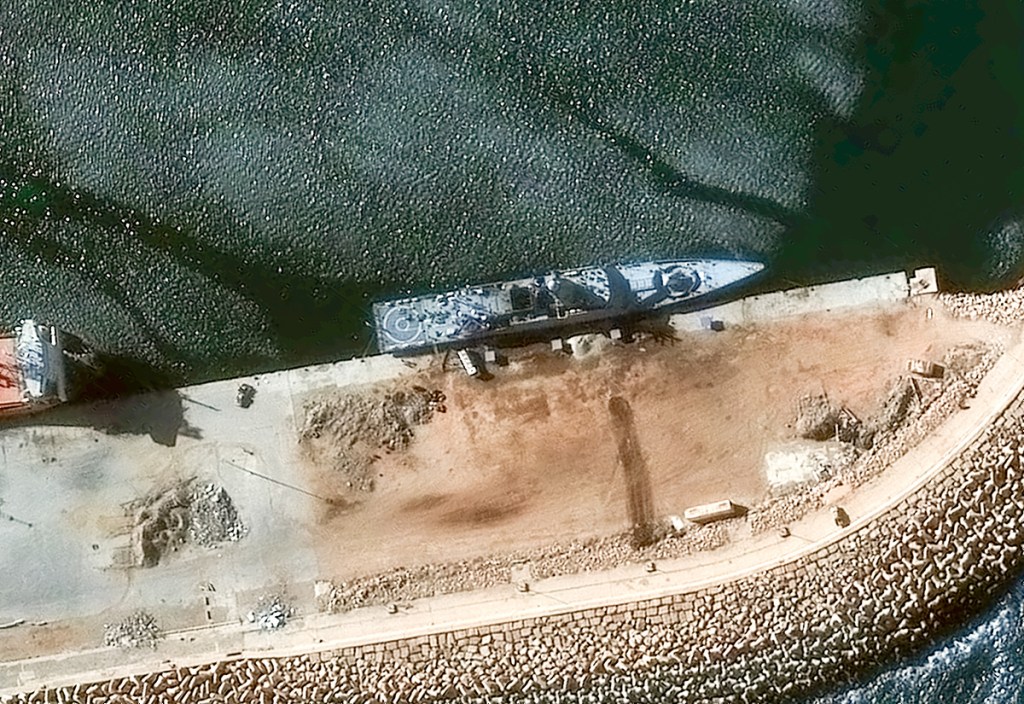
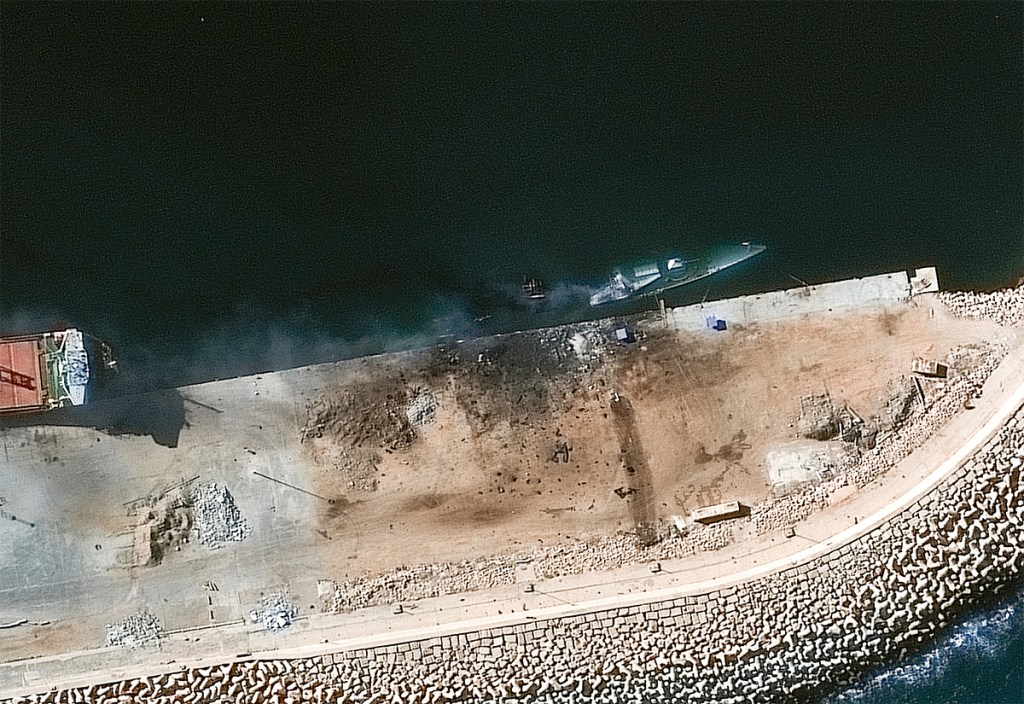
Satellite imagery shows damage to Russian ship between the 21 November (left) and the 22 November (right) 2026. Source: Vantor
Dark Fleet ships
The Russian corvette was reportedly escorting cargo ships transporting military equipment to Libya. According to Il Foglio, citing local sources, Меркурий (Merkury) was supporting a Russian military supply convoy, while satellite imagery showed two cargo vessels moored alongside the warship shortly before the attack. Commissioned in 2023, the 104-metre Project 20380 corvette belonged to Russia’s Black Sea Fleet and was equipped with Kh-35 anti-ship missiles, air-defence systems and anti-submarine weapons (Defense Express).
The operation also targeted Angara (IMO 9179842), a Russian cargo vessel identified by Ukrainian authorities as transporting weapons. According to the Security Service of Ukraine, Merkury regularly escorted Russian military convoys, including those protecting Angara, which operated on supply routes known as the Syrian Express and Libyan Express. The cargo ship’s involvement in sanctioned military logistics was already documented: the US Treasury sanctioned it in 2022, while the European Union listed it in 2024 for transporting defence-related goods connected to Russia’s war in Ukraine. Ukrainian military intelligence also links Angara to shipments of North Korean ammunition to Russia and records AIS shutdowns.
It is worth noting that the cargo vessel struck was Angara (IMO 9179842), not Ascalon (IMO 9198226), as reported by several sources. The two vessels are sister ships with nearly identical designs, both linked to Russia’s sanctioned military supply network and arms deliveries to Africa.
Continuity of Russian arms shipments to Libya
These movements are part of a wider supply network sustaining Russian strategy in Africa, already documented in recent months.
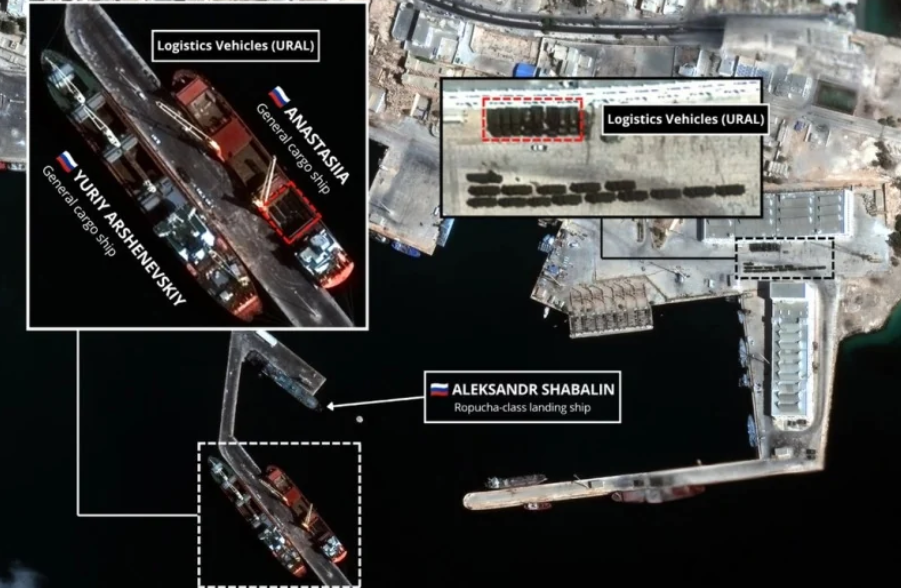
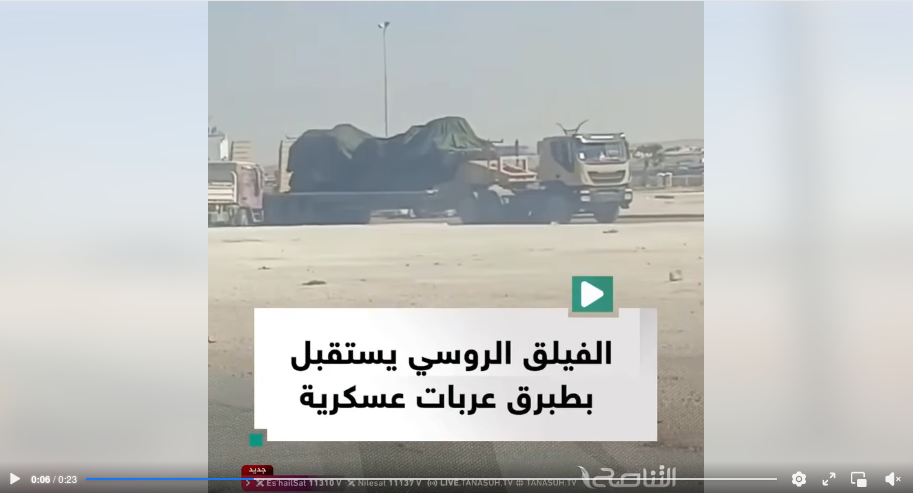
In September, Anastasiia and Yuriy Arshenevskiy, escorted by the Russian landing ship Aleksandr Shabalin, reportedly delivered approximately 3,500 tonnes of military equipment to the port of Tobruk, including armoured vehicles, military trucks and logistical equipment.
In October, The Insider published satellite imagery showing Ascalon, Lady D and Anastasiia loading military vehicles in Baltiysk, Kaliningrad, while their AIS transmissions were disabled. These successive shipments illustrate how Russia uses maritime routes to supply military equipment to Libya and sustain its broader military presence across Africa.
Arms embargo violations, Russian revenues and Africa Corps abuses
Russia’s military deliveries to Libya raise serious questions under international law. Since 2011, UN Security Council resolution 1970 has imposed an arms embargo restricting military equipment transfers without applicable exemptions or authorisations.
Beyond these legal concerns, Russian military exports and overseas deployments also serve Moscow’s economic interests. Russia reported more than $15 billion in arms export revenues in 2025 (Defense News), while a US Congressional Research Service report describes how Russian security operations in Africa have generated payments and access to natural resources.
These networks also support Russia’s Africa Corps, whose operations have been linked to serious abuses against civilians. In October, Human Rights Watch documented torture and unlawful detention involving Africa Corps personnel in Mali. Beyond the sinking of a warship, the Ukrainian operation draws attention to a military supply network that helps sustain Russia’s economic interests, regional influence and controversial military activities across Africa.


