


French Navy images shared on X illustrating the narco-sub which was intercepted
This week, French Navy intercepted a narco-submarine in the Atlantic Ocean, marking its first reported operation against this type of drug trafficking vessel. The semi-submersible was reportedly carrying at least 146 Kg of cocaine when French forces approached it, but its crew deliberately sank the craft before most of the cargo could be recovered. Four suspects were rescued and detained. Beyond the operation itself, the incident highlights the growing use of low-profile vessels by criminal networks seeking to transport large quantities of drugs across the sea while evading maritime surveillance.
The interception: a narco-sub sinks with its cocaine load
According to Naval News, a French Navy frigate intercepted the stateless self-propelled semi-submersible in international waters, supported by its embarked helicopter and a US maritime patrol aircraft.
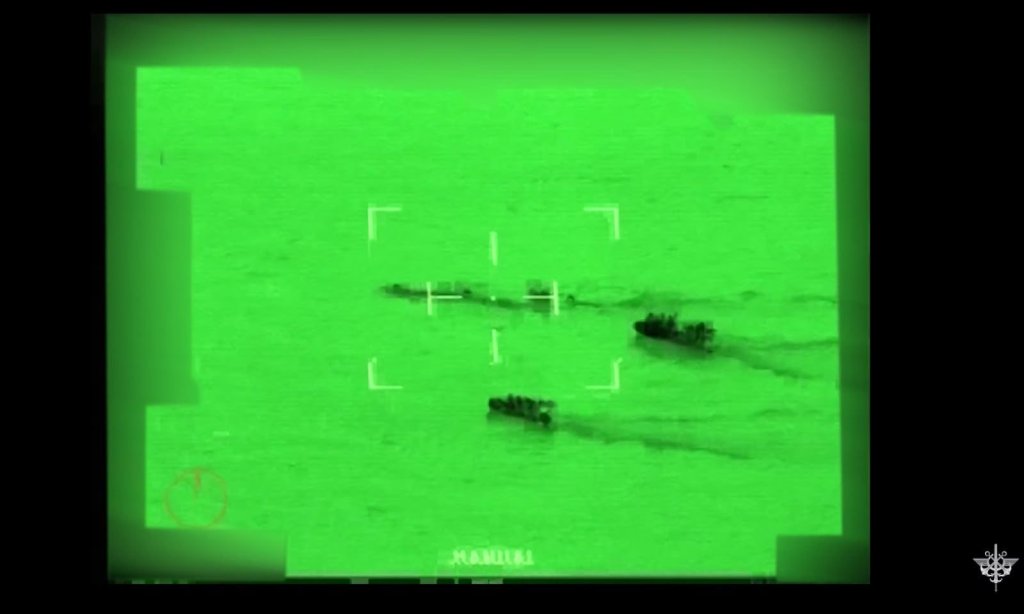
The American aircraft operated under the control of Joint Interagency Task Force South (JIATF-S), which coordinates multinational counter-narcotics surveillance. As the French boarding team approached, three of the four individuals aboard jumped into the sea. The fourth remained on board and activated the vessel’s scuttling mechanism. The semi-submersible sank in less than three minutes. French sailors recovered all four suspects and retrieved four floating bales containing 146 kg of cocaine. The remainder of the reported cargo, estimated at several tonnes, disappeared beneath the surface. Its precise quantity could not be independently established.
The operation was coordinated with the Maritime Analysis and Operations Centre: Narcotics (MAOC-N). The suspects were placed in custody, while the seized drugs and investigation were transferred to the Caribbean branch of France’s Anti-Narcotics Office.
Growing use of narco-submarines: how traffickers are adapting at sea
Despite their name, most narco-submarines are not conventional submarines. They are self-propelled semi-submersibles, designed to navigate with most of their hull below the waterline and only a small structure visible above the surface.
This low profile makes them difficult to identify against the ocean background, particularly across the vast surveillance areas of the Atlantic.
Originally associated with drug-trafficking networks operating from Latin America, these vessels have become an increasingly important means of transporting cocaine over long distances. Their use demonstrates the technical and logistical resources available to organised criminal groups. This interception is not an isolated example.
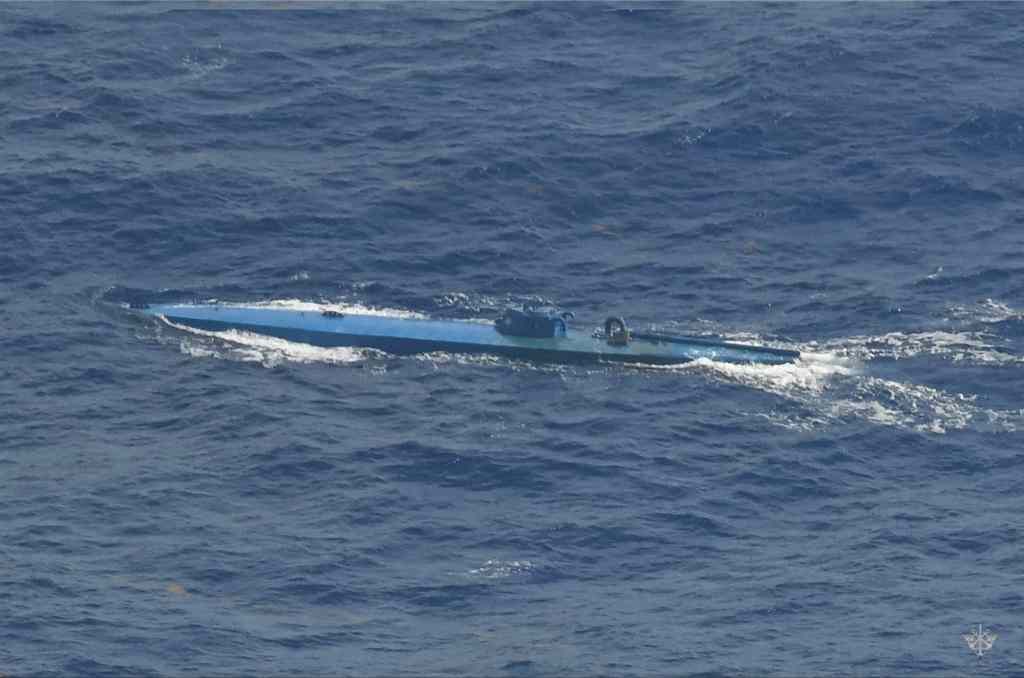
In January 2026, Portuguese authorities intercepted another semi-submersible approximately 230 nautical miles from the Azores. According to the Portuguese Navy’s official account, the vessel was carrying 300 bales of suspected narcotics. The operation involved more than 60 military personnel and lasted over 86 hours. The craft eventually sank because of adverse weather and its fragile construction.
The wider trend is also documented by Europol’s assessment of maritime cocaine trafficking, which identifies semi-submersibles and other non-commercial vessels as increasingly important tools for transatlantic transport. Recent interceptions near the Azores and Galicia demonstrate the expanding reach of these craft.
Together, these cases illustrate how semi-submersibles have become a concern well beyond their traditional operating areas. Their ability to transport substantial cargoes across oceanic distances presents a growing challenge for European and Atlantic maritime security.
Atlantic maritime security: can navies keep pace with narco-subs?
Narco-submarines create several difficulties for maritime law enforcement. Their limited visibility complicates detection, while their long-distance operations require extensive surveillance and cooperation between countries. Even a successful interception does not guarantee the recovery of the cargo. As the French operation demonstrated, traffickers can destroy a vessel and its evidence within minutes, leaving boarding teams to prioritise the safety of those aboard. The legal framework also matters. Stateless vessels operating on the high seas may be subject to boarding under applicable international maritime law, including the United Nations Convention on the Law of the Sea.
The French operation brought together naval forces, aerial surveillance and multinational intelligence coordination. The official account published by MAOC-N emphasised the increasing use of semi-submersibles and the importance of international cooperation in countering them. The scale of the challenge extends well beyond this interception. According to Mer et Marine’s, French naval forces have intercepted approximately 43 tonnes of narcotics since January 2026, following a record 87.6 tonnes seized in 2025.
Finally, Fance’s first narco-submarine interception is therefore both an operational milestone and a warning about the evolution of maritime trafficking. Criminal networks are using increasingly specialised vessels to cross the Atlantic, forcing navies and law-enforcement agencies to adapt their surveillance and interception capabilities.


