


A polluted beach along the United Aarab Emirates cost, where volunteers partiticipate in a cleaning operation. Photo : X.com/CWNBreaking
An oil spill spreading off the northern coast of the United Arab Emirates has reached beaches near Umm Al Quwain, turning sections of the shoreline black and prompting closures across several emirates. Satellite imagery reviewed by BBC Verify showed a slick extending more than 35 kilometres from the suspected source on 21 October, before further images revealed that the pollution had continued to spread towards the coast.
The United Arab Emirates confirmed the spill and launched containment and clean-up operations (The Maritime Executive). Satellite images analysed point to the Gem No. 2, a very large crude carrier that was reportedly struck by a projectile earlier in October. The incident illustrates how attacks on commercial shipping can extend beyond immediate damage to vessels and crews, leaving coastal ecosystems exposed to pollution long after a strike has taken place (Reuters).
From a tanker strike to a spreading slick
The suspected source of the spill was damaged on 9 October, when the Gem No. 2 was reportedly hit by an unidentified projectile while operating off the UAE coast. The strike caused a fire, which was subsequently extinguished, and all 22 Indian crew members were rescued, according to reporting by The National.


The first visible evidence of the leak emerged with satellite imagery, that showed a plume of oil trailing from a tanker consistent in position and dimensions with the Gem No. 2. Radar imagery subsequently captured the slick extending more than 35 kilometres and few days later the pollution spreading further towards the coastby. These observations establish the expansion of the slick, but they do not provide a verified estimate of the volume of oil released.
The incident comes amid a broader escalation of attacks on commercial shipping since the start of the US-Israeli war with Iran. October has been reported as the worst month for attacks on commercial vessels in the Strait of Hormuz and nearby waterways, according to data compiled. UK Maritime Trade Operations has also documented repeated incidents affecting vessels in the region, underlining the risks facing ships navigating the Gulf and its approaches (UKMTO weekly reports).
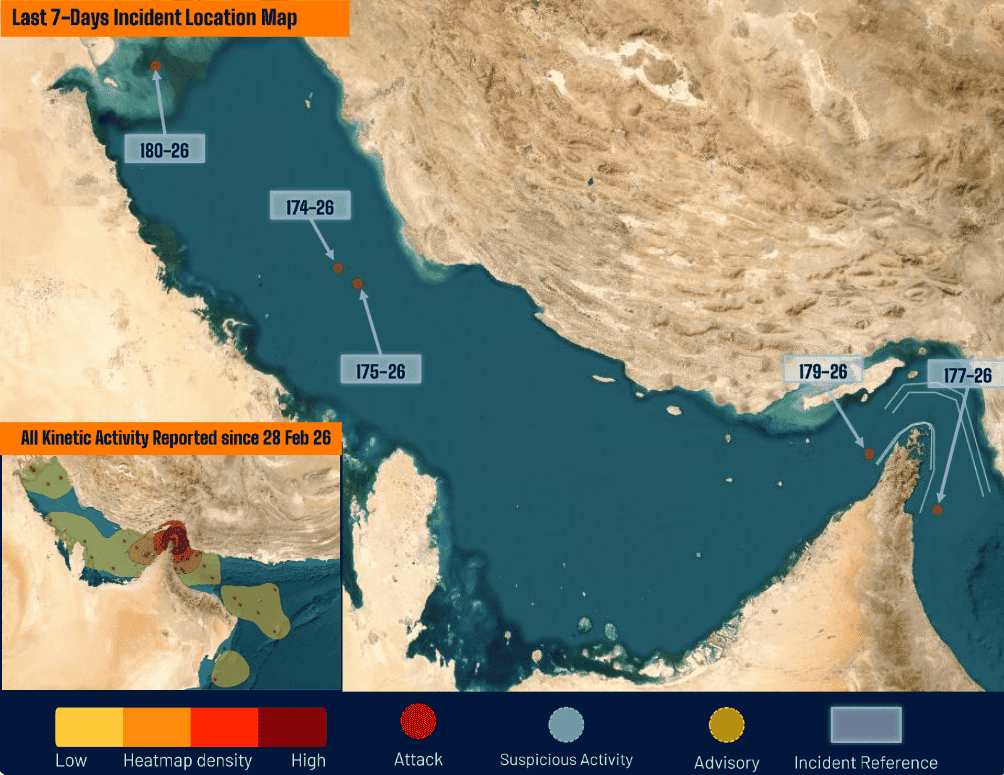
Iran has continued to claim attacks against vessels it accuses of violating its restrictions on passage through the Strait of Hormuz. However, claims made by Iranian authorities about individual strikes have not all been independently verified, and the UAE has not officially attributed this particular oil spill to Iran (The Maritime Executive, 23 October). The reported strike on the Gem No. 2 must therefore be understood within this wider pattern of maritime violence without presenting the precise circumstances of the spill as definitively established.
The environmental consequences, meanwhile, are no longer confined to the offshore area where the leak was first detected.
Oil reaches the beaches
By 23 October, UAE authorities had confirmed that the spill was affecting beaches around Umm Al Quwain, where residents had reported a strong fuel smell in recent days. The Ministry of Climate Change and Environment said that containment, clean-up and remediation measures had begun, while technical teams continued coastal surveys and environmental assessments (The National). Authorities temporarily closed beaches and coastal areas around Umm Al Quwain, shut Al Hamriyah Beach in neighbouring Sharjah as a precaution, and subsequently closed all beaches in Ras Al Khaimah until further notice (Reuters).
The restrictions are intended to limit exposure while the movement of the oil and the extent of the contamination are assessed. Authorities have also urged fishermen and other sea users to avoid affected areas and follow official instructions . The appearance of oil on beaches marks a critical change in the incident. Once pollution reaches the shoreline, removing it becomes more difficult, as oil can mix with sand and accumulate in coastal habitats. John Burt, director of the Mubadala Arabian Centre for Climate and Environmental Sciences at New York University Abu Dhabi, told The National that shoreline contamination can leave persistent tar deposits and damage intertidal environments, with recovery potentially taking years depending on the circumstances.
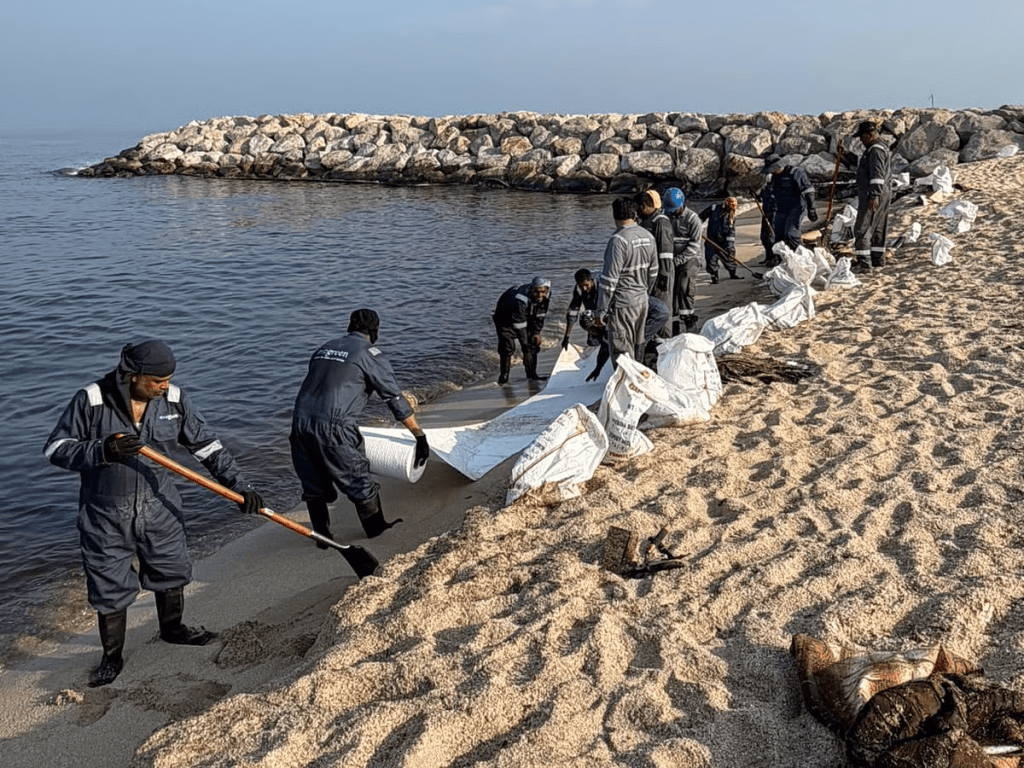
The immediate clean-up may remove visible contamination, but it cannot by itself establish whether oil has entered nearby habitats or how long its effects will persist. That uncertainty is particularly significant given the ecological sensitivity of the coastline towards which the slick is moving.
A threat to marine biodiversity
The proximity of the spill to Siniyah and Khor Al Beidah islands has raised particular concern among environmental specialists. The area is recognised as a globally important key biodiversity area and contains coral habitats, seagrass beds and saltmarshes, as well as green turtles and the critically endangered Halavi guitarfish. These habitats support marine life and provide important ecological functions along the UAE coastline.
Oil can affect marine organisms through direct physical contact and exposure to toxic compounds. It can smother seabirds’ feathers, trap turtles and damage fish gills, while prolonged exposure may affect the reproduction and survival of marine species. The effects are not necessarily limited to animals visibly covered in oil: contamination can also affect organisms and habitats beneath the surface, depending on the type of oil and the conditions in which it spreads.
An environmental cost that may not end with the attack
The spill off the UAE is one example of the wider risks created by attacks on commercial shipping in the Gulf in the current geopolitical context. With October reported as an especially intense month for vessel attacks around the Strait of Hormuz, further incidents could expose additional ships, crews and coastal environments to danger.
The immediate consequences of a strike may be measured in damaged vessels and endangered crews, but an oil leak can continue to spread long after the initial incident. As the slick approaches sensitive habitats and reaches populated coastlines, the environmental cost of maritime conflict becomes increasingly difficult to contain. With attacks continuing to threaten commercial shipping, and looking at last declaration of Iranian military authorities, further attacks and therefore further pollution incidents are very likely to continue.


