


Every year, hundreds of end-of-life commercial vessels set sail for the southern coast of Pakistan. Their destination: Gadani, the second-largest shipbreaking yard in the world. Behind the industrial promise of steel recycling lies a grim reality: forced labor, disastrous health conditions, and irreversible ecological damage.
While major shipping lines boast strict Environmental, Social, and Governance (ESG) commitments in the West, the beaches of Gadani reveal a very different truth—the cynical outsourcing of risk at the expense of the global South’s populations and environment.
1. Modern Slavery at Low Tide
On the beaches of Gadani, thousands of workers—often from Pakistan’s poorest regions—manually dismantle ship hulls weighing tens of thousands of tons of steel.
- Pittance Wages: For grueling labor exceeding 12 hours a day, workers earn an average of just $3 to $4.
- Insecurity and Lack of Rights: Without formal contracts, unions, or social safety nets, these laborers have no recourse in the event of injury or wrongful termination.
2. Health and Safety: Dying for Scrap Metal
At Gadani, basic occupational health and safety standards are practically nonexistent.
- Rudimentary Tools: Blowtorch cutting is performed without helmets, protective goggles, or proper gloves.
- Recurrent Fatal Accidents: Residual gas explosions in cargo holds, falling steel plates, and structural collapses cause dozens of deaths and severe injuries every year.
- Toxic Exposure: Lacking respirators, workers inhale asbestos, lead, and toxic paint fumes daily, leading to aggressive cancers and chronic respiratory diseases at a very young age.
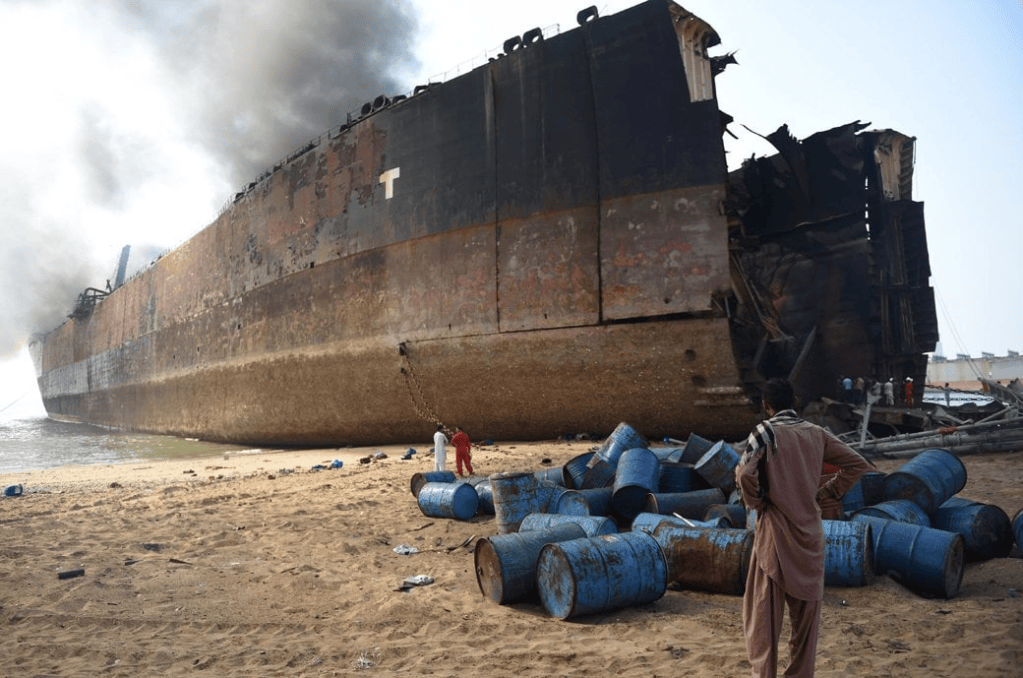
3. An Irreversible Ecological Disaster
The practice of “beaching” vessels directly onto the shore at Gadani prevents any containment of pollutants:
- Toxic Infiltration: Heavy oils, PCBs, heavy metals, and chemical runoff spill directly onto the sand and into the Arabian Sea.
- Destruction of Biodiversity: Local marine life and fish breeding grounds are decimated, turning the coastline into a biological dead zone.
4. The Hypocrisy of Western Shipowners
How do ships belonging to Western companies end up on the beaches of Gadani?
Through well-established legal loopholes. End-of-life vessels are sold to intermediaries known as cash buyers, who reflag the ships under flags of convenience (such as Palau, Comoros, or Saint Kitts and Nevis). This legal sleight of hand bypasses the Basel Convention as well as European regulations on clean ship recycling.
Conclusion: Demanding True Accountability for the Global Fleet
The tragedy at Gadani is not a technical inevitability; it is an economic choice. Urgent action is needed to enforce strict vessel traceability from construction to dismantling, forcing shipowners to fund clean, safe recycling.


