


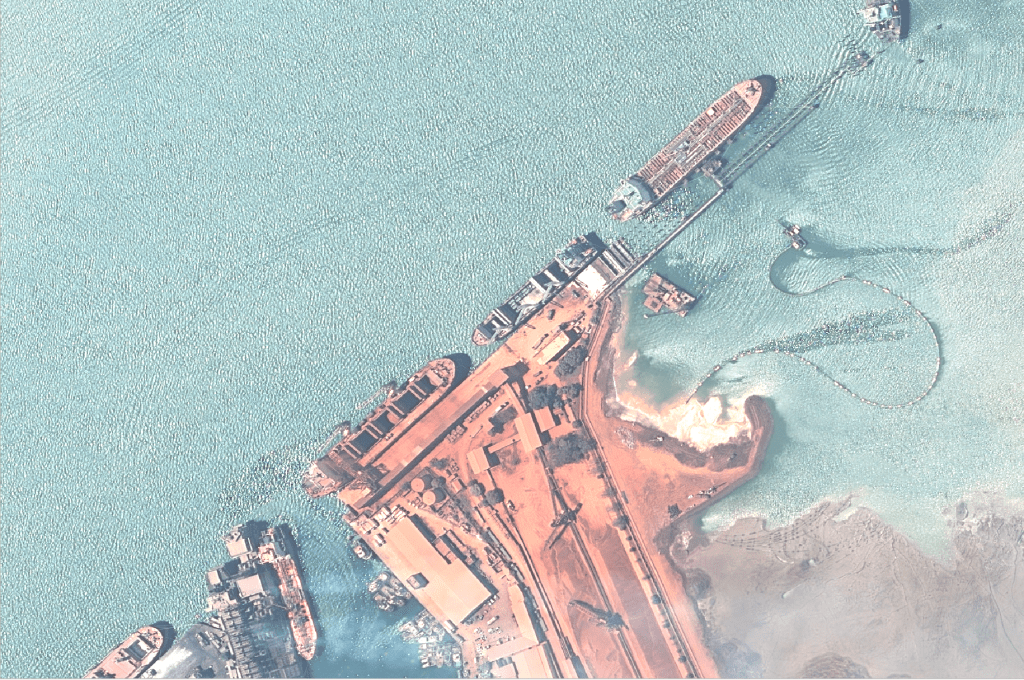
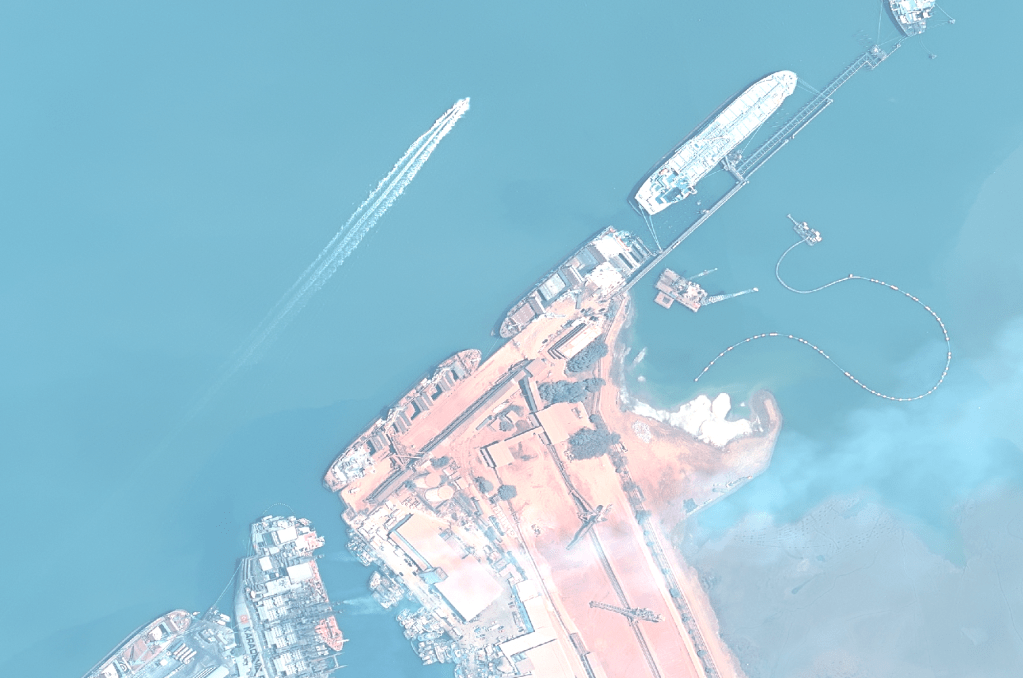
The recent berthing of the cargo vessel Sabetta (IMO: 9347061) at the Port of Conakry between March 20 and 25, 2026, signals a critical shift in the operations of the “Dark Fleet.” Originally designed to circumvent Western sanctions on Russian hydrocarbons, this “shadow fleet” has now evolved into a clandestine logistical pipeline for military hardware, securing the presence of the Africa Corps (formerly Wagner Group) across the Sahel.
Military logistics under a civil veneer
The Sabetta, a vessel under international sanctions, departed from the Baltic and Arctic regions (Kaliningrad and Murmansk) to offload a significant military arsenal at the Albayrak-managed terminal in Conakry.
According to satellite imagery and open-source intelligence (OSINT) reports, the cargo included:
- Armored Personnel Carriers (APCs) and tactical logistics vehicles.
- Electronic warfare systems and artillery components.
- Strategic transshipment: These assets were rapidly moved via rail and road toward the Malian border, utilizing existing industrial networks (such as those belonging to Rusal) to mask military movements as commercial mining logistics.
Beyond oil: the weaponization of the Shadow Fleet
The Sabetta mission reveals a diversification of the “Dark Fleet” mission profile. No longer restricted to crude oil or LNG, these vessels are now used to establish a “gray zone” logistics network:
- Plausible Deniability: By utilizing aged general cargo ships with opaque ownership structures, exporters can blend lethal hardware into standard commercial manifests.
- Integrated Gray Networks: The Africa Corps is leveraging established Russian economic interests in West Africa to turn civilian commercial ports into secure military transit hubs, bypassing traditional maritime oversight.
Environmental peril and the insurance void
The proliferation of the Dark Fleet represents a “ticking ecological time bomb” for West African coastal waters. The risks are compounded by several systemic failures:
- Structural Integrity: These vessels are often over 20 years old and operate well beyond their standard service life. Lack of rigorous dry-docking and maintenance increases the risk of catastrophic hull failure or engine blackout in high-traffic corridors.
- The Insurance Gap: Sanctioned vessels are excluded from the International Group of P&I Clubs. In the event of an oil spill, collision, or grounding, there is zero financial coverage for environmental remediation or third-party damages.
- Legal Impunity: Through the use of “flag-hopping” and anonymous shell companies, the true owners are shielded from liability. Coastal states like Guinea are left to bear the total cost of any disaster, as these ships essentially operate as “legal ghosts.”
The case of the Sabetta demonstrates that the Shadow Fleet is now a tool of military power projection, where environmental and safety risks are systematically externalized to transit nations.


