


On 24 December 2024, the EstLink 2 electric submarine cable, which connects Finland to Estonia, was sabotaged by a Russian ship.The seas and oceans are areas of contention between nations, and to guarantee its operational superiority and strategic autonomy, France is developing autonomous underwater drones.
This is not the first instance of submarine cables being severed in the Baltic Sea. For instance, in November 2024, two telecommunications cables were severed in the Baltic Sea between Sweden and Germany. The German Defense Minister has characterized this as sabotage.Since the invasion of Ukraine, Moscow has been conducting hostile but discreet operations in this strategic sea.The sabotage of submarine cables represents a new threat to states, and several solutions exist to monitor them, including autonomous underwater drones (AUVs). Since the 2010s, AUVs have become essential tools for a multitude of sectors, benefiting from artificial intelligence and automation for increasingly sophisticated missions. Today, their role in seabed mapping, mine detection and the monitoring of marine infrastructures and ecosystems is crucial, and their future looks promising, with advances in collaboration and underwater technologies.
What is an Autonomous Underwater Vehicle (AUV)?
A Unmanned Underwater Vehicle (UUV) is defined as an unmanned underwater vehicle equipped with systems that facilitate navigation and operational functionality, the complexity of which varies according to the degree of autonomy exhibited by the vehicle. Two categories of UUV are distinguished. The first of these is the Autonomous Underwater Vehicle (AUV). An AUV is a machine capable of determining its position and navigating towards a precise objective in a completely autonomous way. In order to facilitate this, a comprehensive list of tasks and operations must first be formulated. These tasks and operations are then meticulously programmed in advance. During the navigation phase, operators do not intervene. The AUV can be configured to operate in three distinct modes: fully autonomous, with no link to the surface; autonomous but with tracking from the surface; or linked to the surface with two-way communications. The employment of AUVs empowers humans to undertake tasks in locations that are otherwise inaccessible. These drones have the capacity to dive to depths of up to 6,000 metres and have an operational autonomy of up to 48 hours.
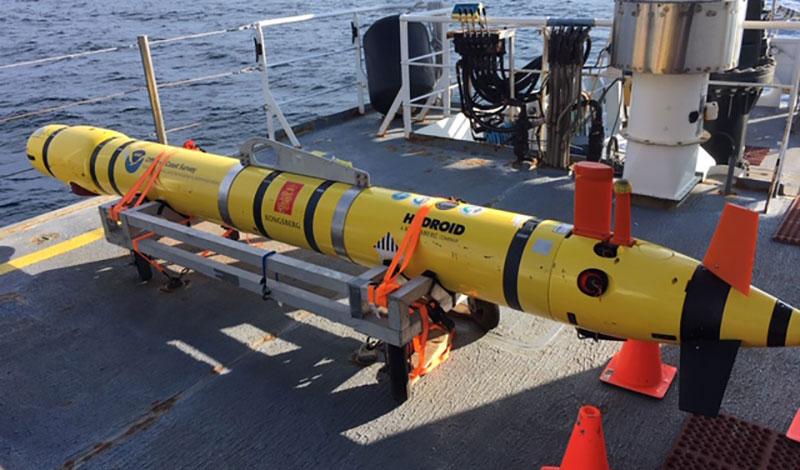
The mass of these vehicles ranges from 100 to 6,000 kilograms. The hull can be of the “platform” type or, more commonly, of the “torpedo” type. Two classifications of AUVs have been identified: compact (typically under 2,000 kg) and modular (with a choice of design sensors). The financial outlay required for these vessels can range from USD 100,000 to USD 10 million.
The Role of AUVs in Maritime Security
Unmanned aerial vehicles (UAVs) are transforming maritime security in all domains, both civilian and military. These unmanned aerial vehicles offer advanced capabilities for surveillance, threat detection and underwater intervention. These unmanned aerial vehicles are utilised for the purpose of monitoring the seabed and critical infrastructures. Their capacity to detect anomalies before they escalate into major issues enables proactive maintenance. For instance, in the context of pipeline inspections, UAVs are tasked with identifying and assessing two primary types of accidents: the covering of the pipeline by sediments or sand, and the identification of areas where the pipeline no longer rests on the seabed. Furthermore, they contribute to the protection of exclusive economic zones (EEZ). AUVs play a pivotal role in the surveillance of a nation’s EEZs, aiding in the protection of its maritime resources from unauthorised exploitation, including illegal fishing and undersea mineral mining. These vehicles are capable of detecting suspicious vessels or clandestine activities in territorial waters. Furthermore, they play a pivotal role in detecting and neutralising sea mines. These autonomous drones are capable of identifying underwater mines and explosive devices in sensitive areas, particularly in conflict or post-conflict zones, thereby reducing the risk to commercial and military vessels. Finally, they will be capable of exploring and mapping the seabed, as demonstrated by the French Ulyx drone.
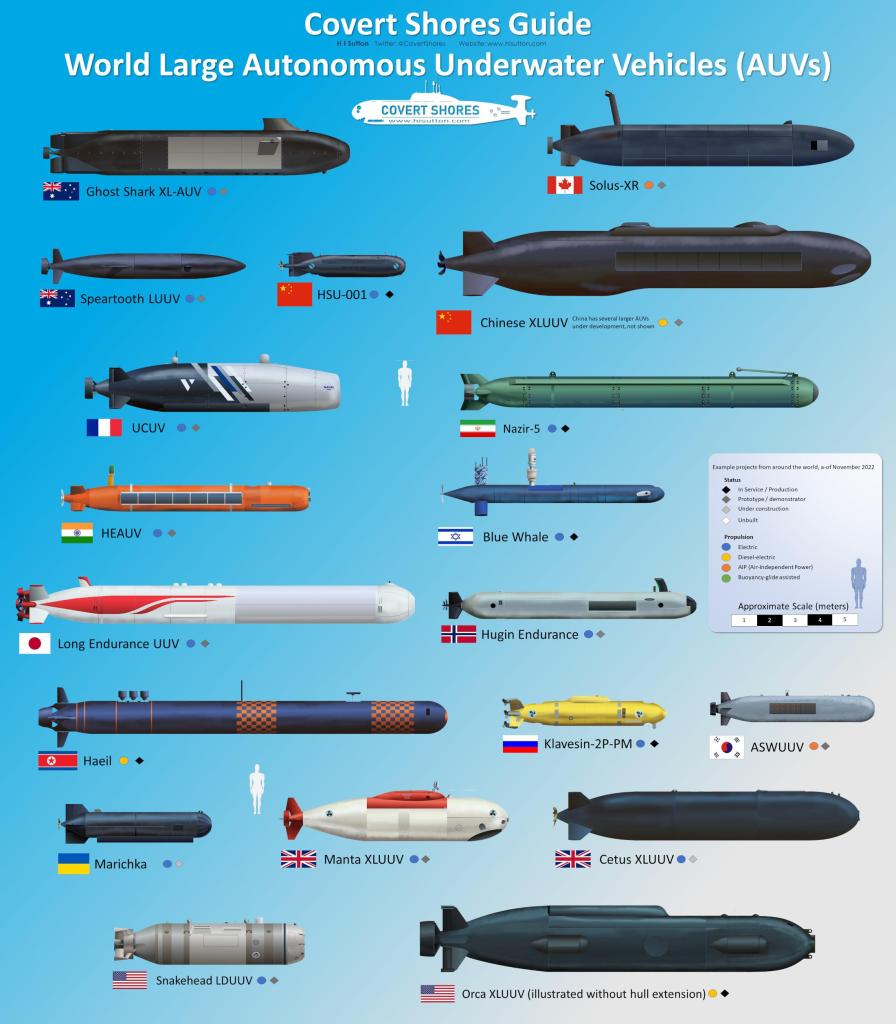
In the medium term, underwater drones will contribute to naval combat. In 2023, an agreement was signed between the French Procurement Agency (DGA) and the French company Naval Group for the development of the UCUV (unmanned combat underwater vehicle) demonstrator. Unmanned aerial vehicles (UAVs) are playing an increasingly important role in naval combat, providing navies with the technological and tactical superiority they need. The UCUV project represents a significant milestone for France, as it positions the nation within a select group of countries engaged in the definition, development and evaluation of the first large-scale autonomous submarine system. Since 2016, Naval Group has been developing this submarine drone with the objective of conducting intelligence missions and, in the longer term, engaging in naval combat with torpedoes or other weapons.
ULYX: Autonomous underwater vehicle leads the way
Unmanned aerial vehicles (UAVs) have the capacity to access areas that are otherwise difficult to reach, such as the deep seabed. However, the seabed has only been explored to a depth of 3% in detail, partly due to the inaccessibility of the majority of the seabed, with more than three-quarters of it lying at depths of over 3,000 metres. It is therefore strategic for a nation to possess the capacity to operate within this environment. The deep seabed is a prolific source of natural resources, including hydrocarbons, minerals, and precious metals, among others. It is also of critical importance to the global economy, as evidenced by its role in submarine cable infrastructure and the demarcation of exclusive economic zones (EEZs). Furthermore, the deep seabed serves as a vital reserve for ecological and biodiversity conservation. France, with the second largest EEZ in the world, must invest in the seabed.
France has entrusted the exploration of the seabed to the Ulyx autonomous underwater drone. This recent development represents the latest addition to the French oceanographic fleet, which is one of the five largest in the world and the fourth to have developed such a craft for scientific purposes. Since its inauguration in 2020 and subsequent commissioning in 2022, Ulyx has signified a substantial advancement in the realm of underwater exploration. The drone was developed by the French company EXAIL in collaboration with the French Research Institute for Exploitation of the Sea (IFREMER). This drone represents the pinnacle of technological advancement within the French oceanographic fleet, with its primary function being the scanning of the ocean floor. It assists researchers in identifying significant sites, facilitating a more comprehensive understanding and mapping of the oceanic environment. This robot is distinguished by its onboard intelligence, which enables it to autonomously assess the necessity to halt, gather information, or dive to a maximum depth of 6,000 metres, in accordance with the received instructions. The deployment of Ulyx has led to a significant augmentation in the accessibility of the deep sea, with 90% of this region now within reach. The Ulyx robot is capable of collecting a wealth of cartographic, physical and chemical data in a single dive, which can last up to 48 hours.
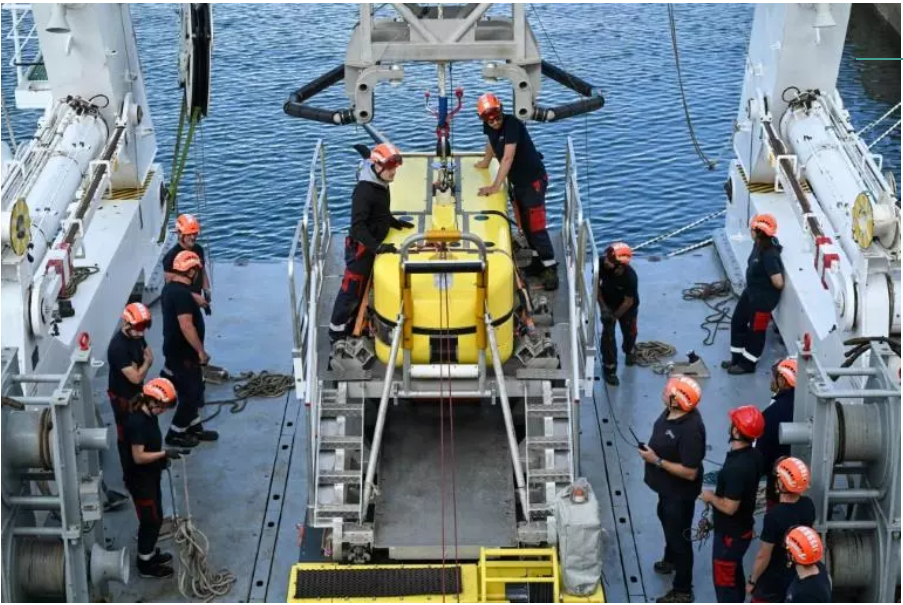
The French Ministry of the Armed Forces is launching its “mastery of the seabed” program in 2022. The objective of this initiative is threefold: firstly, to acquire a comprehensive understanding of the seabed; secondly, to establish a system for the monitoring of seabed infrastructure and ocean space; and thirdly, to facilitate the execution of actions on, from and towards the seabed. To this end, the program will see the development of two underwater drones, one of which will be autonomous, while the other will be remotely operated. The development of the A6K-M autonomous underwater drone, a military version of the Ulyx drone, is being undertaken by EXAIL.


