


Strategic geography at Indian Ocean crossroads
Antsiranana Bay in far northern Madagascar commands exceptional strategic value as one of the world’s premier natural harbours. Spanning over 250 km² with its distinctive “four-leaf clover” configuration of inlets, the bay offers unparalleled protection through a narrow 600-metre navigable entrance flanked by sheer cliffs. Carnets OI (Audard, 2025) Positioned north of the Mozambique Channel through which 30% of global oil transits when Suez disruptions occur the bay sits at the nexus of southwest Indian Ocean sea lanes.
French colonial deputy François de Mahy proclaimed in 1885 that Antsiranana surpassed Sydney, Rio, Sebastopol, and Toulon, declaring it “better than anything Richelieu, Colbert, or Napoleon could have dreamed.” Carnets OI (Audard, 2025) Unlike pre-steam era sailing ports avoiding its treacherous southeast varatraza winds, modern navies prize its deep-water capacity accommodating any vessel tonnage regardless of numbers.
Operation Ironclad: 1942 imperial confrontation
British warships Operation Ironclad Diego-Suarez 1942 Imperial War Museum
The bay’s military significance peaked during Operation Ironclad (May 1942), when British forces seized Diego-Suarez from Vichy French control to secure Indian Ocean supply lines against Japanese expansion. Carnets OI (Audard, 2025) Over 50 Allied warships including HMS Illustrious crowded its protected waters after defeating Joffre’s 1900-1905 fortifications, marking the theatre’s largest amphibious operation.
Restored to Free French forces, Diego-Suarez supported counter-insurgency during the 1947 Malagasy uprising before Madagascar’s 1973 expulsion of French troops a pivotal assertion of post-colonial sovereignty redirecting French assets to Réunion, Mayotte, and Djibouti. Carnets OI (Audard, 2025)

France returns: 2026 Commercial Port Modernisation Agreement
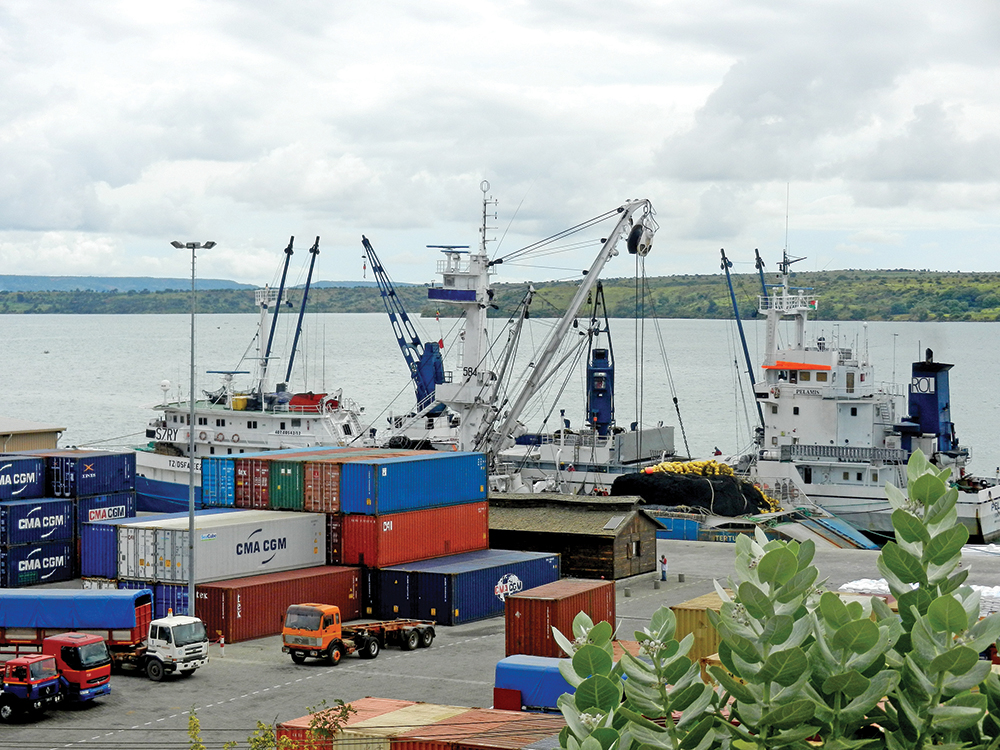
In a significant development, France signed a commercial port modernisation agreement with Madagascar in February 2026, targeting Antsiranana’s strategic infrastructure. L’Express de Madagascar (Feb 2026) This cooperation revives the bay’s 200 metre SECREN-operated graving dock its sole major naval facility since 1975 focusing on commercial upgrades while carefully avoiding military connotations.
The agreement signals France’s return to the Indian Ocean maritime domain it dominated until 1973, positioning Antsiranana as a civilian logistics hub amid regional competition. Modernisation targets increased container throughput and repair capacity for merchant vessels transiting Mozambique Channel routes, complementing Toamasina’s dominance without overt militarisation.

Indo-Pacific rivalries reactivate colonial infrastructure
Contemporary Indo-Pacific dynamics amplify Antsiranana’s allure amid China’s port diplomacy and India’s counterbalancing naval presence. Carnets OI (Audard, 2025) Indian Navy ships INS Airavat and INS Shardul delivered cyclone relief in 2020 followed by military instructors and joint exercises, fuelling unverified rumours of Indian SIGINT stations since 2007.
“Two Indian warships in Antsiranana: Warships crowd the bay” L’Express de Madagascar, March 2021
Chinese fishing agreements (2018) and port expansion speculation compound local anxieties in Madagascar’s fragile political environment where annual presidential pledges yield minimal concrete action beyond the abandoned “Andrakaka 2020” economic zone. Carnets OI (Audard, 2025) France’s 2026 commercial agreement adds a Western counterweight to these Asian initiatives.
Cosmopolitan realities vs military fantasies
Antsiranana transcends military narratives through “bottom-up cosmopolitanism” blending Comorian, Yemeni, Indian, Chinese, and Réunionnais communities distinct from mainland Madagascar. Carnets OI (Audard, 2025) Historic Indian families control key landholdings while khat production not warships dominates economic discourse. Regional assertions like 2000 civic crest modifications prioritising bay symbols reflect port grievances more than basing ambitions.
Rising kidnappings targeting Indian traders and bi-national loyalty pressures amid India-China-France rivalry threaten historic mediation roles, transforming diasporas from economic assets into geopolitical flashpoints. Carnets OI (Audard, 2025)
Strategic Takeaway: France’s February 2026 port agreement marks a subtle return to Antsiranana Bay, balancing India-China competition through commercial infrastructure while imperial geography continues shaping Indo-Pacific maritime strategies. Local cosmopolitan resilience demands nuanced analysis beyond great power chessboards.


