


1. Record-breaking lifespan in the Arctic
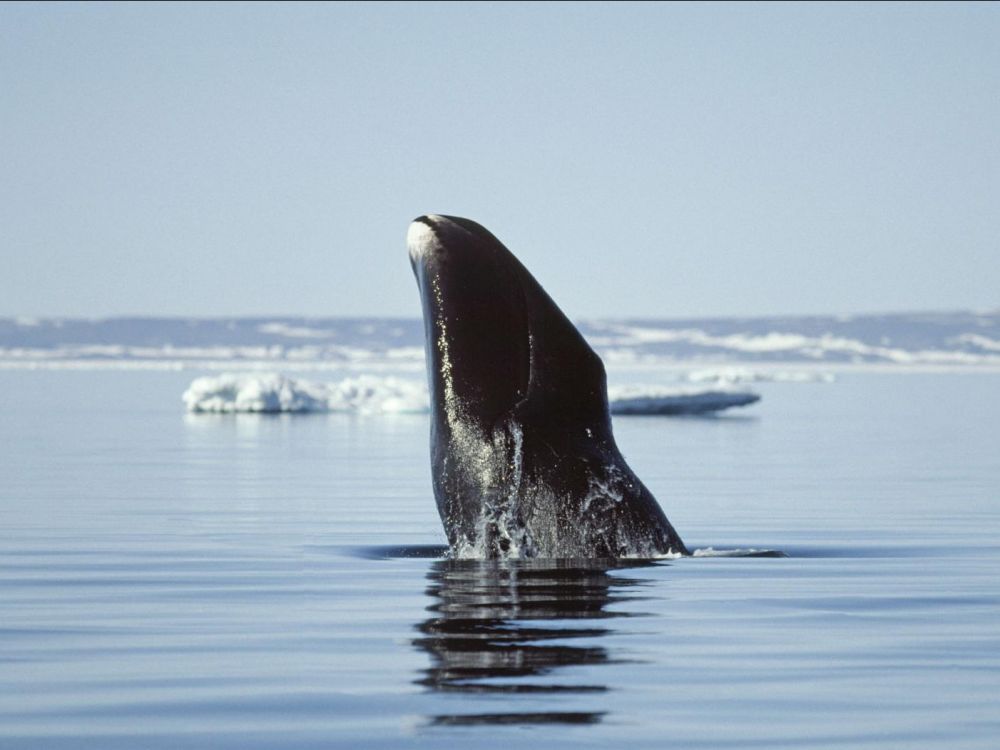
The Bowhead Whale (Balaena mysticetus), also known as the Greenland whale, is a biological marvel of the Arctic, holding the record for the longest-living mammal.
- Exceptional Lifespan: It is estimated that these majestic animals can live for over 200 years. Some individuals have been confirmed to have reached the age of 211.
- The “Gandalfs of the Sea”: In sharp contrast, most other great whales (like Humpbacks or Blue Whales) typically live between 80 and 90 years.
- Historical Evidence: This incredible longevity was partly proven by the discovery of 19th-century harpoon tips embedded in their blubber, confirming that certain individuals survived over a century of intensive whaling.
2. Slowed aging and disease resistance
The greatest secret of the Bowhead Whale is not just that it lives long, but that it appears to age well. Age-related diseases, such as cancer, occur much later and are less frequent than in humans. This phenomenon challenges classical biological rules:
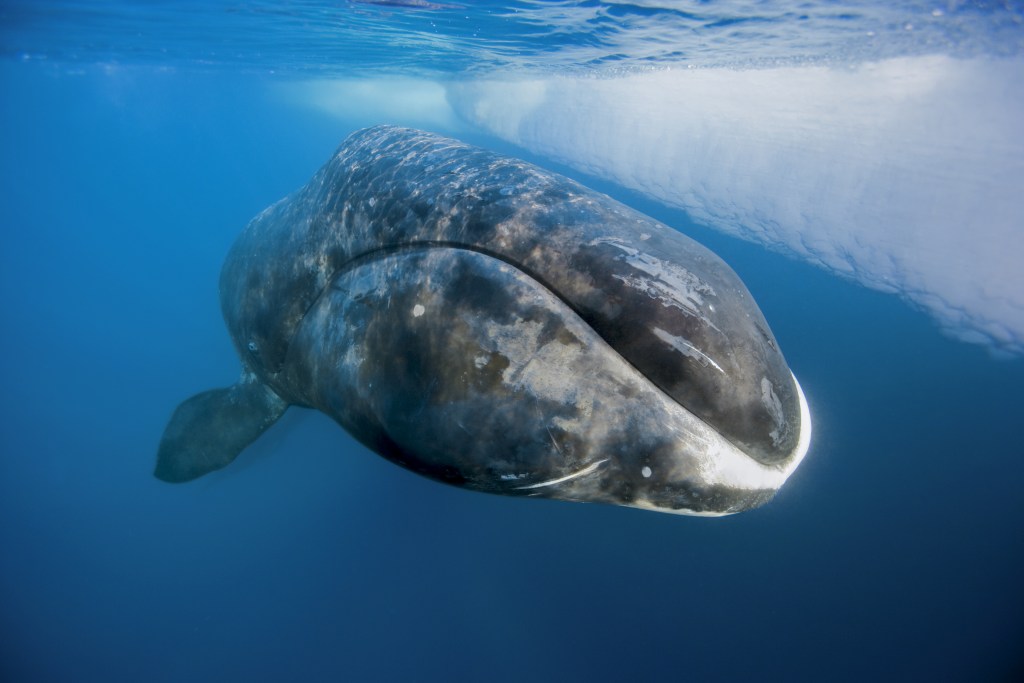
- Peto’s Paradox: Theoretically, the larger and longer-lived an animal is, the more cells it has, and thus the higher its risk of cancer (due to mutation accumulation). Bowhead whales, despite their enormous mass (up to 100 tonnes) and advanced age, are not more susceptible to cancer than much smaller mammals.
3. Genetic secrets unlocked
Scientists have closely examined the Bowhead Whale’s genome to understand the underlying mechanisms of this resilience. Recent research has identified key adaptations:
- DNA Repair: The Bowhead Whale possesses genes that have evolved to optimize the repair of damaged DNA and prevent mutations.
- Anti-Aging and Anti-Cancer Genes: Certain genes associated with senescence (cellular aging) and cancer show specific mutations or duplications. These mechanisms work to maintain genomic integrity.
- The CIRBP Protein (Clod-Inducible RNA Binding Protein): Studies have shown that this protein, which plays a key role in repairing double-strand DNA breaks, is expressed at levels up to 100 times higher than in humans. Furthermore, its action is thought to be activated by cold, a perfect adaptation to its Arctic environment.
Implications for human longevity
Research into the Bowhead Whale genome has a clear objective: identifying mechanisms that could one day be activated in humans.
- Scientists are exploring how to stimulate or mimic this DNA repair efficiency, whether through pharmacological or environmental approaches, in order to slow down the effects of aging and increase our resistance to cancer.


