


Salvage operations underway for grounded vessel
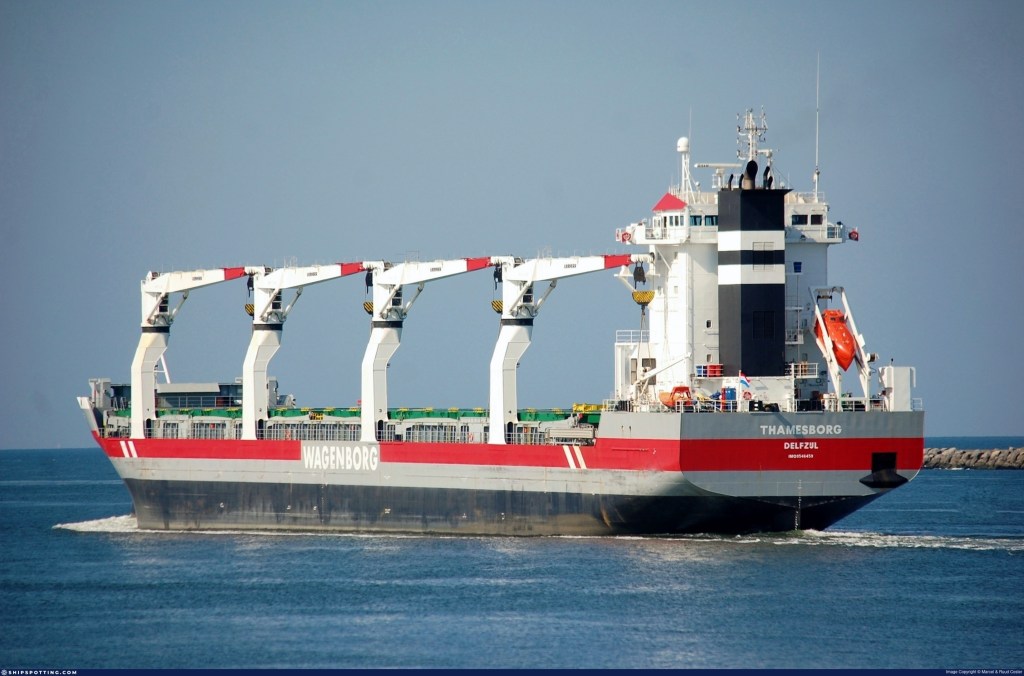
The Canadian Coast Guard and Dutch shipping company Royal Wagenborg confirmed that the cargo vessel Thamesborg remains stable after grounding in the Franklin Strait on September 6. Carrying a cargo of carbon block, the 21,359 dwt ship shows no immediate danger despite 10 days stranded in Arctic waters.
A salvage master, naval architect, and initial equipment have already reached the vessel, and a formal refloating plan has been submitted to the Canadian Coast Guard and Transport Canada for review. According to officials, all refloating costs and any remediation actions will be the responsibility of the shipowner.
Additional salvage gear and personnel are expected this week, though adverse Arctic weather conditions have already delayed some operations.
Canadian coast guard assistance
The CCGS Jean Goodwill and CCGS Sir Wilfrid Laurier were dispatched to transport salvage materials but have since been released. The CCGS Des Groseilliers now remains on scene to monitor the operation and provide emergency support if required.
Surveys of the vessel revealed limited damage to ballast tanks, with no water ingress into cargo holds or fuel tanks. The 172-meter-long Thamesborg, built in 2012, was en route from Asia to Baie-Comeau, Canada, when it grounded near Prince of Wales Island.

Arctic navigation challenges
Royal Wagenborg emphasized that the vessel was designed to meet Finnish/Swedish ice class 1A (IACS Polar Class 7), making it capable of summer and autumn Arctic operations in first-year ice. To enhance safety, the company hires ice pilots—often retired icebreaker captains—who bring valuable local expertise. Canadian authorities have expressed strong support for this additional knowledge.
The company is no stranger to Arctic operations. In 2016, Royal Wagenborg became the first European shipping company to complete a full Northwest Passage transit without icebreaker assistance. The Thamesborg itself previously sailed from Canada to China along this route.
The Northwest Passage reduces the voyage by about 3,750 nautical miles compared to the Panama Canal, saving nearly two weeks of sailing time. However, the route demands precise planning due to shallow waters, narrow passages, strong currents, and minimal navigation aids. Mariners often rely on a combination of electronic and paper charts rather than buoys or beacons.

Conclusion
The grounding of the Thamesborg highlights both the opportunities and risks of Arctic shipping. While the Northwest Passage offers significant time savings, it remains a hazardous route requiring specialized skills, robust vessel design, and close coordination with Canadian maritime authorities.


