


Sea Surface Temperature in the Mediterranean Breaks Previous Records
June 2025 saw unprecedented marine heatwaves in the Mediterranean Sea, with 62% of its surface affected by extreme heat events, the highest extent ever recorded for the region. According to Mercator Ocean International, which operates the EU’s Copernicus Marine Service, the average sea surface temperature (SST) across the Mediterranean rose to 23.86°C, surpassing the previous June record of 23.72°C set in 2022.

This temperature spike was driven by a persistent heat dome over Europe, combined with clear skies, calm winds, and increased solar radiation. These conditions created a perfect storm for record-breaking surface warming.
Mercator Ocean International now formally recognized as an intergovernmental organization following the recent UN Ocean Conference in Nice presented these findings during an online press briefing.

Broader Oceanic Impacts and Environmental Consequences
A marine heatwave is defined as a sustained period (minimum five consecutive days) of unusually high sea surface temperatures, ranking within the top 10% of historical temperature records over a long-term climate baseline. These events can range from moderate to extreme in severity.
Beyond the Mediterranean, 88% of the basin recorded above-normal temperatures, with anomalies exceeding 1°C in 60% of cases and 2°C in 30%. The Western Mediterranean was particularly affected, experiencing record-breaking levels of intensity, duration, and spread.
Meanwhile, the North Atlantic experienced its third hottest June on record, with an average SST of 22.84°C, particularly along the European and North American coastlines.
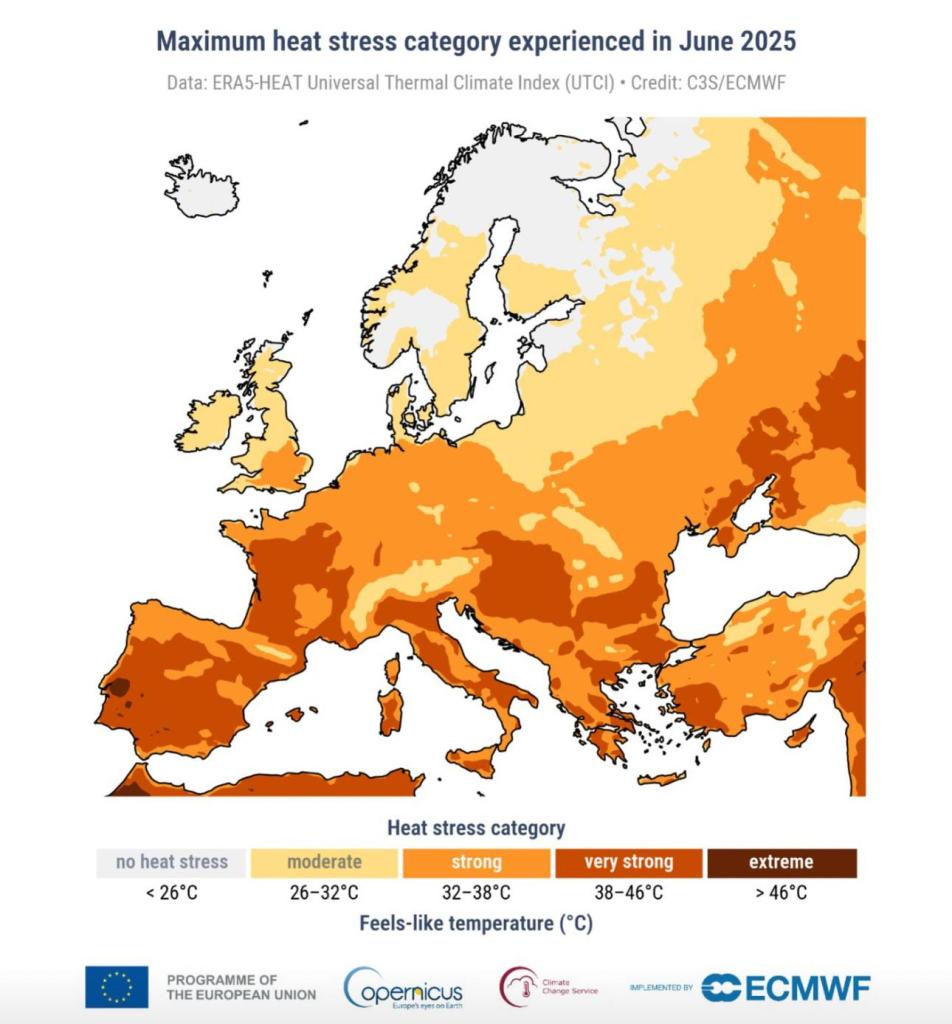
Globally, the average ocean surface temperature reached 20.75°C in June. Notably, 20% of the global ocean surface experienced high-intensity marine heatwaves. According to Mercator Ocean, nine of the hottest Junes globally have occurred over the past decade, with 2025 ranking third, just behind 2023 and 2024.
These extreme events carry severe ecological and socio-economic repercussions. Prolonged marine heat can:
- Disrupt marine ecosystems
- Reduce food availability for marine life
- Threaten fisheries and aquaculture
- Foster harmful algal blooms
- Destroy seagrass meadows
- Trigger coral reef degradation
- Decrease the ocean’s capacity to sequester CO₂
Summary
In June 2025, the Mediterranean Sea experienced record marine heatwave conditions, with 62% of the basin affected—highlighting the ongoing warming of the world’s oceans. The data released by Mercator Ocean International underscores the increasing frequency and severity of marine heat events and the urgent need for climate resilience strategies to mitigate long-term impacts on ecosystems and ocean-based economies.


