


Introduction
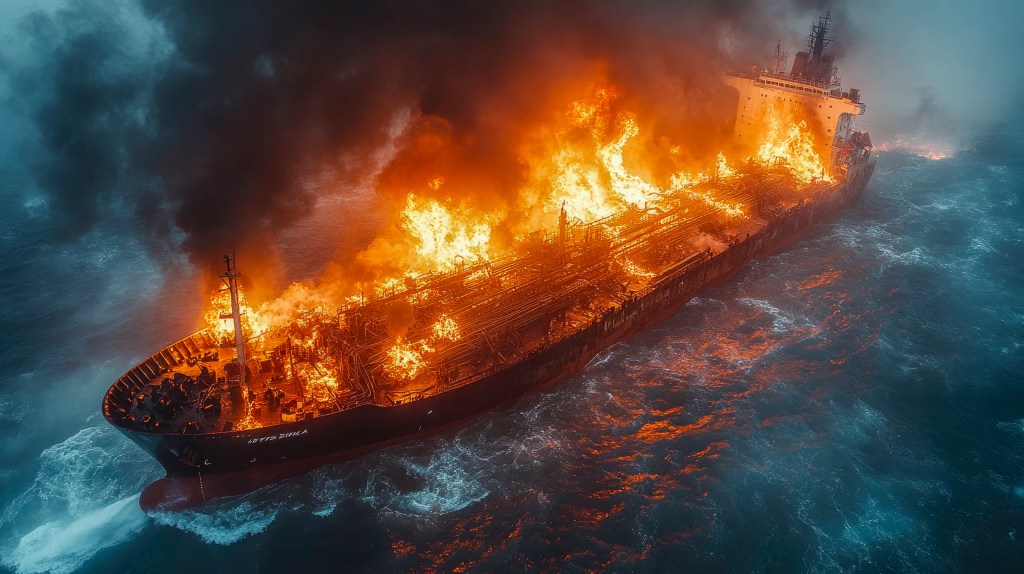
On 29 November 2025, Ukraine linked unmanned surface vessels (USVs) reportedly struck two sanctioned tankers Kairos and Virat associated with Russia’s so‑called “shadow fleet” in the Black Sea, and disrupted operations at the Caspian Pipeline Consortium (CPC) marine terminal off Novorossiysk. Turkish authorities said the Gambian‑flagged Virat suffered minor starboard‑side damage above the waterline and no casualties, while Kairos experienced an onboard fire and crew evacuation the previous evening. Hours later, the CPC confirmed significant damage to one of its single-point moorings and a temporary suspension of loadings pending risk clearance. These incidents condense several strands of the war at sea: Ukraine’s use of long‑range USVs, Russia’s reliance on opaque tanker networks to move oil under sanctions, and the vulnerability of critical energy infrastructure in a confined maritime theatre. See contemporaneous reporting by Reuters on the Virat incident and operational statements carried by Reuters on CPC’s halt.
Operational picture in the Black Sea: reported strikes on Kairos and Virat, and disruption at the CPC terminal
Timeline and positions
Türkiye’s Ministry of Transport reported on 29 November that the Gambian‑flagged Virat was attacked by unmanned vessels off the Turkish Black Sea coast, having already been struck late on 28 November; the vessel sustained minor damage and no injuries, and remained stable. The previous evening, the Gambian‑flagged Kairos reportedly suffered an explosion and fire roughly 28 nmi from the Turkish coast, with 25 crew evacuated. These official updates align with Ukrainian security sources who said the two tankers described as part of a sanctions‑evading logistics network were bound for Novorossiysk to load crude. See Reuters, a Ukrainian‑sourced account via the Kyiv Independent, and French‑language coverage from RTBF and Le Figaro.

Platforms and methods
Open sources identify Ukraine’s Sea Baby as a family of explosive laden USVs fielded since 2023 against bridges, warships and infrastructure. Descriptions vary: independent analysts suggest ranges of several hundred nautical miles and large warheads optimised for above‑waterline structural damage to merchant hulls and offshore facilities. For technical context and imagery, see H. I. Sutton’s overview of Ukrainian USVs and a general reference on the Sea Baby platform.
Immediate damage reports and safety measures
The CPC confirmed that one of its three offshore single‑point moorings (SPM‑2) was “significantly” damaged by a naval drone, prompting a precautionary halt to loadings and the withdrawal of tankers from the area. Within two days, stakeholders indicated that exports were gradually resuming via SPM‑1 while repairs continued elsewhere; the Kremlin decried the strike’s international impact, and Kazakhstan publicly protested given CPC’s role in exporting its crude. See Reuters (29 Nov), Reuters (30 Nov) on Kazakhstan’s protest, and Reuters (1 Dec) on the Kremlin response. Chevron confirmed on 1 December that loadings from its Tengizchevroil venture were proceeding via an alternate mooring, while another SPM remained under repair; see Reuters.
What is Russia’s ‘shadow fleet’ and how it works: flags, ownership layers and dark practices
Flags of convenience and recent shifts
The “shadow fleet” shorthand describes hundreds of older tankers operating under opaque ownership, thin or questionable insurance, and flags of convenience often shifting registries to move sanctioned Russian oil. Estimates vary widely, from roughly 600 to more than 1 200 vessels depending on definitions. For 2024–2025 ranges and enforcement pressure, see Reuters’ review of fleet size and policy moves and the European Parliament Research Service brief on investments and fleet composition (EPRS, Nov 2024).
AIS gaps, spoofing and ship‑to‑ship transfers
Operators in this segment frequently employ AIS silences, identity spoofing and offshore ship‑to‑ship (STS) transfers to obscure voyage origins and cargos. The European Union has floated new instruments to tighten inspection and flag‑state cooperation aimed at these practices, including a proposed maritime declaration encouraging inspections of high‑risk tankers; see Reuters on the EU initiative (Oct 2025). These behaviours complicate casualty response and environmental protection, particularly where older hulls and minimal classification oversight are present.

Class and insurance frictions
Many shadow‑fleet tankers trade without International Group P&I cover or with limited war‑risk endorsements, raising liability concerns for coastal states. The London market’s Joint War Committee (JWC) continues to list large parts of the Black Sea and approaches as enhanced‑risk waters guidance that shapes underwriting decisions and can amplify freight volatility after high‑profile incidents. See the JWC listed‑areas portal via the International Underwriting Association (IUA) and a representative circular effective 1 January 2025 from The Swedish Club.
Chokepoints and law: Türkiye’s role, the Bosporus, and the Montreux Convention
Maritime administration and safety perimeters
Ankara has treated recent Black Sea drone‑related incidents primarily through a safety lens confirming damage assessments, establishing stand‑off distances and coordinating rescue assets when needed. The Virat episode underscores Türkiye’s practical role as first reporter and maritime risk manager for events occurring near the Straits approaches; see ministry extracts relayed by Reuters and regional coverage by Asharq Al‑Awsat.
Legal exposure and the Montreux framework
Merchant ships retain freedom of passage through the Turkish Straits, but security‑related controls and traffic regulations remain with Türkiye. The Montreux Convention constrains warship transits and has allowed Ankara to limit belligerent naval movement during the war while keeping merchant traffic flowing. See the Turkish MFA’s practice note on implementation of the Montreux Convention and a general reference on the convention’s regime.
Energy and market implications: CPC flows, Kazakh crude, and risk premia
CPC throughput and sensitivity
The CPC system moves roughly 80 % of Kazakhstan’s crude exports via a 1 500 km pipeline to the Black Sea, where the Novorossiysk marine terminal loads Aframax/Suezmax tankers through three offshore SPMs. Damage to SPM‑2 on 29 November forced a temporary suspension and clearance of the loading zone; by 1 December, Chevron said loadings continued via SPM‑1 while another mooring remained under repair, moderating expectations of a sustained outage. See Reuters (29 Nov) and Reuters (1 Dec). Kazakhstan publicly objected to the strike, describing CPC as vital to its export lifeline; see Reuters (30 Nov).
Insurance, freight and war‑risk pricing
Each incident in the northern Black Sea contributes to elevated war‑risk premia and voyage‑by‑voyage security assessments. Underwriters already price in enhanced risk for the region, and high‑profile attacks near the Straits can lift rates for specific corridors or vessels perceived as higher risk such as older tankers under opaque ownership. Guidance via the JWC listed‑areas framework and insurer circulars provides the baseline; see IUA/JWC and The Swedish Club.
Market impact lens
Short‑term throughput disruptions at CPC can move regional differentials and temporarily re‑route cargoes, but redundancy across SPMs and rapid risk‑reassessment often limit outage duration. In this case, the immediate halt was followed by partial resumption, tempering broader price effects though the episode underscores the vulnerability of single‑point systems to stand‑off attack. See Chevron’s update via Reuters and contemporaneous analysis by The Maritime Executive.
Strategic calculus: drones at sea and the evolving cost of sanctions evasion
Effects on Russian maritime logistics
Ukraine’s USV campaign has progressively pushed Russian logistics into deeper defensive postures, from Sevastopol to coastal energy assets. The latest strikes extend that pressure to the commercial ecosystem supporting oil exports. Targeting tankers framed as part of sanctions evasion raises operational risks for owners, charterers and service providers who may already face compliance scrutiny and limited insurance options. Open‑source accounts suggest the drones’ speed, sea‑state tolerance and payloads now permit engagements far from Ukrainian‑held coastline, complicating Russian maritime security planning; technical context via H. I. Sutton.
Likely adaptations by Russia, registries and insurers
Moscow and allied stakeholders can be expected to diversify routing and staging (e.g., STS areas), harden moorings and deploy additional picket craft and barriers around high‑value nodes such as single‑point moorings. Registries and classification societies face renewed scrutiny of ageing hulls, ownership transparency and safety management for vessels engaged in sanction‑sensitive trades. Insurers may respond with narrower coverage, higher deductibles, or voyage‑specific exclusions for SPM approaches and designated risk boxes, reinforcing the cost gradient between compliant and non‑compliant trades.
Risk outlook for commercial shipping in the Black Sea
For compliant commercial operators, the principal exposure lies in proximity to contested waters and the possibility of misidentification or collateral damage. Turkish authorities’ quick safety cordons and communications help, but periods of heightened alert can still cause traffic delays near the Straits and in the approaches to Novorossiysk. The Montreux regime provides stability on warship movements but does not insulate merchant shipping from the knock‑on effects of drone warfare an area where best‑practice transit planning, AIS discipline (without going dark), and clear communications with Vessel Traffic Services (VTS) reduce risk.

Conclusion The late‑November strikes compressed the Black Sea’s overlapping risks into a single 24‑hour cycle: uncrewed surface craft pushing into commercial lanes, a vulnerable energy terminal halting and then cautiously resuming loadings, and the exposure of a sanctions‑busting tanker ecosystem to kinetic disruption. The incidents highlight how the cost of sanctions evasion increasingly includes physical risk at sea. For coastal states, insurers and shipowners, the immediate task is pragmatic manage safety and liability while the strategic trend is clear: USVs have become a durable feature of the maritime battlespace, and shadow‑fleet operations face a steadily tightening enforcement and threat environment.


